The Adventures of Prince Achmen. 1926. German. The oldest surviving animated film in history.
I am sorry BUT THIS IS NOT JUST “GERMAN” PLEASE DO NOT FORGET THE NAME OF THE ARTIST.
THIS WONDERFUL MOVIE WAS MADE BY LOTTE REINIGER! SHE WAS ONE OF THE PIONEERS OF ANIMATION!!!! SHE MADE OVER 40 FILMS IN HER CAREER USING A TECHNIQUE SHE INVENTED WITH HER HUSBAND! WALT DISNEY ENDED USING HER MULTI PLANE TECHNIQUE IN HIS OWN MOVIES! AND SHE FUCKING MADE THE FIRST FEATURE LENGTH ANIMATED MOVIE!! (she ended up fleeing Nazi germany eventually work in north america, both us and canada, on other movies.)
This woman is one of the most important figures in animation HISTORY!
I love it when you can pick up an animator’s quirks.
I’ve read in old interviews with Milt Khal’s fellow animators that he did the swaggle to purposefully show off. Moving the head in 3-d space is an exceptionally hard thing to do but Khal upped the level of difficulty to a place many animators wouldn’t go. Not only are they all doing the swaggle you’ll notice they are all TALKING while they are doing it. This is back in the days where you had to use a timing sheet to pace your animation and a head swaggle doesn’t work if its too slow or too fast so he had to figure out the right speed so it looked natural while the character finishes what they have to say while not interfering with the distinct mouth shapes. Not only did Khal do it without any shifting weight problems or timing issues he would often do it while moving the rest of the body. This isn’t his signature move just because he was good at it.This is his signature move because he was one of the only people skilled enough to DO IT AT ALL.
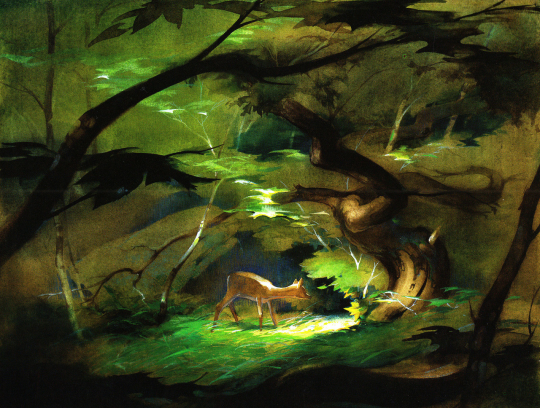
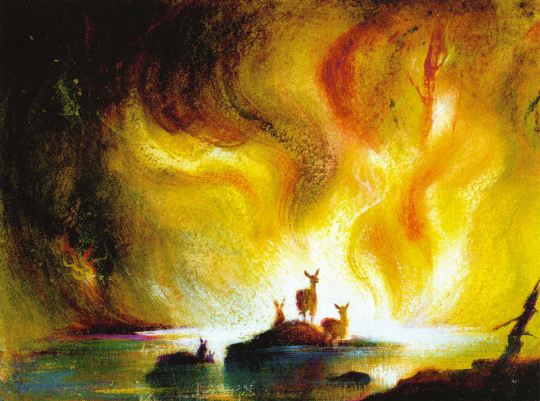
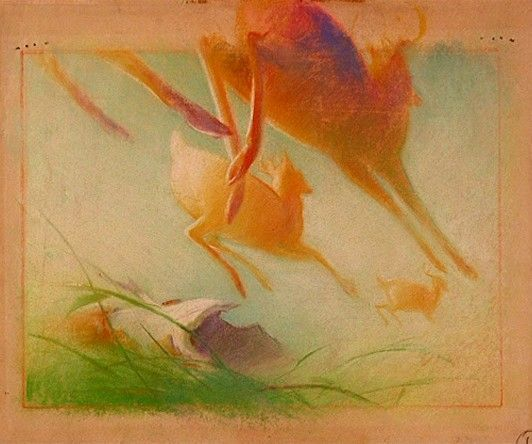
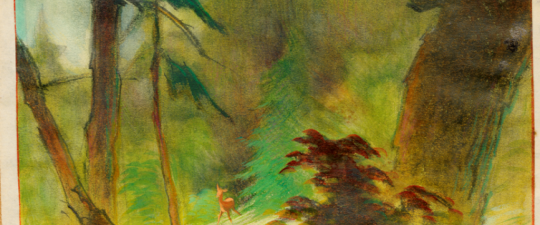
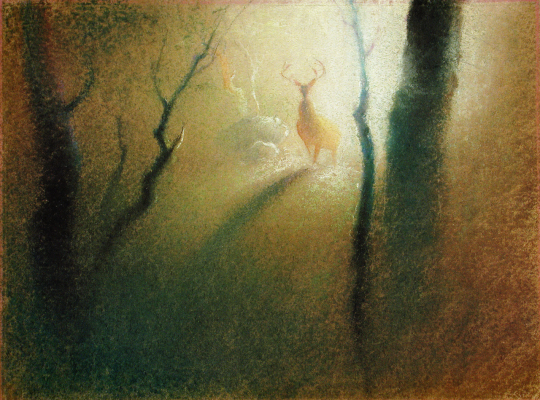
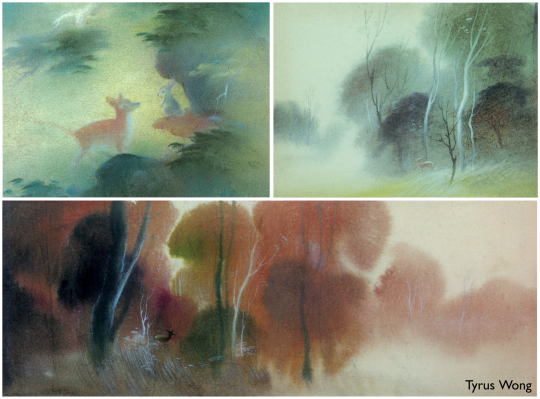
He was a young artist employed by the Disney studio, but tasked with the entry-level job of finishing off the work of the animators and crafting the “in-between” animations that completed the characters’ movements. Wong had learned that studio executives were creating a film from the new novel, Bambi, A Life in the Woods by Felix Salten. Tom says the young artist read the book and without consulting his supervisor, “took the script and painted some visual concepts to set the mood, color and the design.”
His sketches recalled the lush mountain and forest scenes of Sung dynasty landscape paintings. His initiative paid off. Walt Disney, who was looking for something new for the film, was captivated and personally directed that Wong be promoted. Today, top animators and illustrators revere Wong’s work. Children today are as enchanted by the misty, lyrical brushstrokes of Wong’s colorful nature scenes, inspired by his training at Otis College of Art and self-study of Sung Dynasty art
THIS GUY HELPED MAKE THE FILM THAT MADE ME WANT TO BE A FILMMAKER AND *HE IS STILL ALIVE*
AAAAAAAAAAAAAH
I met him at a gallery event a number of years ago and, UGH HE IS SO TALENTED AND SO KIND AND ENCOURAGING THERE IS A REASON WE ALL LOVE HIM. Also, my alma.
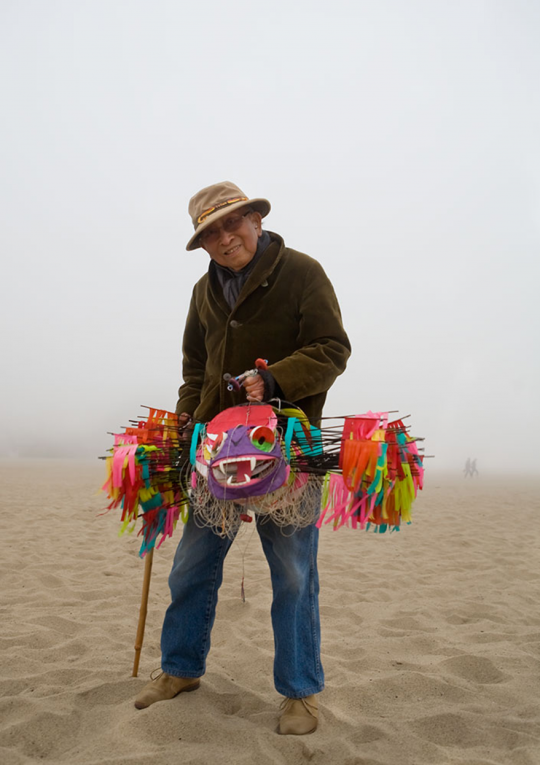
GUYS WTF IS THIS CRAZY TALENTED GUY- HE MAKES KITES TO WOW JUST WOW
When I was in school and wanted to work in animation, there was very little information about how cartoons are actually made. Even my professors at college knew very little about the industry as it is today. I’m sure it would’ve been better to study somewhere in California (like CalArts) to be better informed about this stuff, but I didn’t have that opportunity.
Nowadays, many kids in school have a dream career that they don’t really know much about. There’s a lot of missing bits of information and a lot of straight up lies that get circulated as fact as people try to scramble to put the pieces together on how cartoons for television are actually made.
I’ve been storyboarding for television for a while now, and there still aren’t clear resources for those wanting to get into the industry. I wanted to make the basics available to everyone, so here’s a quick rundown through the TV pipeline. Please note: all studios and productions are different. Even cartoons made within the same studio could have wildly different production guidelines. This is not a concrete explanation of how every cartoon is made; this is simply a generalized look at the “typical” television pipeline.
**DISCLAIMER** All images in this post have been sourced from blogs, twitters, scribd and flickr pages are publicly available, and no internal studio materials have been used that have not been already published publicly online. This post is influenced heavily by my own individual experience, as well as friends’.
With that said, this might be a lengthy read, so let’s go!
I know this is lengthy, but if you’re in art school studying animation, thinking about a career in animation, or just want to learn more about the TV animation industry, this is a MUST READ!!!!
Seriously. A lot of this stuff I had to learn on the job the first few weeks working in the TV animation industry. I really really wish professors taught me this stuff in college. This is invaluable information, folks.
If you think Walt Disney was the first person to create a feature length animated film you’re wrong. The first person to do it was a woman – Lotte Reiniger. See more about how her silhouette stop motion worked.
I’ve already reblogged this but I’m going to again because ever since I found out about Reiniger I’ve been horrified and pissed off that she was NEVER ONCE mentioned in my history of animation class. And neither were any of the other women animators I’ve learned about since.
Animation majors of all people should be taught about this, but no the only figures deemed worthy were all men






 willowfoot