I normally don’t comment on posts like this but HOLY SHIT I can tell you that this sort of thing is EXTREMELY helpful if you need to buff up your resume a bit.
Ever customize a tumblr theme? BAM! You have HTML experience.
Taken on commissions, even if it was for something like, I dunno, Gaia gold back in the day? BAM! Professional artist.
Create your own graphics for your blog? BAM! Image editing experience/junior graphic designer.
Roleplay? BAM! Working collaboratively in a creative capacity.
You gotta look at your hobbies and boil them down to what you’re really doing. Everything you do gives you experience in SOMETHING, you just gotta figure out how to word it in different ways.
this is a great website for those of you want to start learning sign language and its not limited to just england or america, it’s sign from all over the world. simply type in the word you want to know, click the countries flag and watch the video demonstration of the sign.
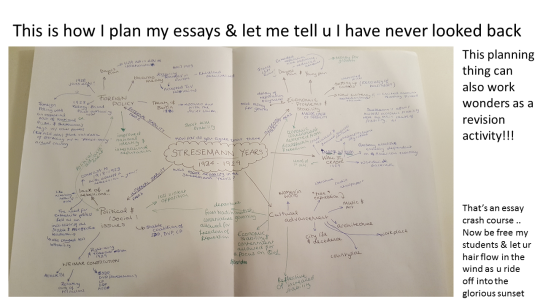
instead of actually writing an essay.. i wrote a thing on how to write an essay (woah meta) & added some pictures of my plans so u can see what i actually mean!! enjoy my friends i hope this is useful to someone
Last week, I got attacked by the most painful and persistent hiccups of my life at work. My co-worker heard me hiccuping and said, absently, “Got the hiccups?” and I said miserably, “Yeah.” And she said, “Prove it.”
And I glared at her, because why the fuck should I prove anything to her? And I waited for the next hiccup, which would prove that she was a dick and that I was, indeed, suffering from hiccups. And… that hiccup never came. And she smirked and said, “My daughter calls me whenever she has hiccups and when I ask her to prove it, she never can.”
And that was weird. But later that night, I got hiccups AGAIN, so I said to my boyfriend, “I HAVE HICCUPS.” and he said “Yeah, you do.” And I said, “No, ask me to prove it.” And he gave me a look like I was a crazy person, and I hiccuped again and insisted he ask me to prove it and he did and BAM. I couldn’t do it!
And a few days LATER, I got the hiccups WHILE DRIVING ALONE, and I said, out loud, “DUDE, I have the hiccups.” And then, in another voice, “PROVE IT.” And bam. Couldn’t do it.
The moral of the story? Apparently hiccups are little shits who refuse to perform on command.
There you go. Hiccup cure. I can’t promise it’ll work for everyone, but so far, it’s worked for me like six times.
You’re welcome.
My dad always did this. Weirdly, it worked
“I’ll give you a hundred bucks if you hiccup again” also works
And since people are having a hard time figuring this out for themselves, let me just say: every single item on this list is OPTIONAL, just look for what you need personally and let others do the same.
OH MY GOD whyyyy did no one tell me you’re supposed to send thank-yous after interviews?? Why would I do that???
“Thank you for this incredibly stressful 30 minutes that I have had to re-structure my entire day around and which will give me anxiety poos for the next 24 hours.”
I HATE ETIQUETTE IT’S THE MOST IMPOSSIBLE THING FOR ME TO LEARN WITHOUT SOMEONE DIRECTLY TELLING ME THIS SHIT
NO ONE TOLD YOU???? WTF! I HAVE FAILED YOU.
Also:
Dear ______:
Thank you so much for the opportunity to sit down with you (&________) to discuss the [insert job position]. I am grateful to be considered for the position. I think I will be a great fit at [company name], especially given my experience in __________. [insert possible reference to something you talked about, something that excited you.] I look forward to hearing from you [and if you are feeling super confident: and working together in the future].
My brother got a really great paid internship one summer. The guy who hired him said the deciding factor was the professional thank you letter my brother sent after the interview.
should it be an email? or like a physical letter?
email, you want to send it within a few hours at max after the interview if you can so it’s fresh in their mind who you are.
Confirmed! I interviewed for a job right after arriving in NY. The interview went incredibly well, and I went home and immediately wrote a thank you letter and put it in the mail. I had a super good feeling about this interview.
I didn’t get the job.
However, a few weeks later, I was called in to interview with another editor in the same company, and I did get that job. I found out later from the initial editor (the one who didn’t hire me) that he had planned to offer me the job, but since I didn’t follow up with a thank you letter, he assumed I didn’t really want it. He offered the job to another contender–but when he got my letter in the mail shortly after the offer had already been made, he went to HR and gave me a glowing recommendation. It was based on that recommendation that I got called in for the second interview.
So: send an email thank you immediately (same day!) after the interview. If you’re feeling extra, go ahead and send a written one too. OR go immediately to a coffee shop, write the letter, and return to the office and give it to the secretary.
Either way, those letters are important.
Pro tip: If you really want HR to develop a personal interest in your application, publicly thank them on linkedin. Just make a short post telling your network about how X recruiter really went above and beyond to make you feel welcome, or about how be accommodating and professional they were, or whatever. Make sure to use the mention feature so they’ll get a notification and see it.
Flattery will get you everywhere… and public flattery that might make its way back to their manager, doubly so.
Obligatory plug for one of FreePrintable.net’s sites: ThankYouLetter.ws. They have a whole section with interview thank you letter templates, and a page with specific tips for interview thank you letters. (There are also tons of other letter templates if you browse around a bit.)
we’re hiring for a position right now to fill someone who would work directly beside me; we’d essentially be list partners sharing all duties and content management under the same boss. we’re down to the two last finalists right now, a guy and a girl, and i have to tell you, the girl is seriously edging out the guy right now because after our first round of interviews, he didn’t send me a thank-you email, and only sent one to my boss. i didn’t think that would bother me, but it does. it essentially told me he doesn’t really care about my opinion or that that the time we chatted didn’t matter/register as important to him, and he’s only interested in making a good impression on my boss. but the chemistry and work ethic between the two of us as assistants is incredibly important: if he gets the job, it’s important to me that he respects me as a mentor and list-partner. so another tip i’d add is that it’s important to thank *everyone* you interviewed with, not just the people you’d be working with or under.
With this post I listed 10 outline techniques to help writes move their story from a basic idea to a complete set of arcs, plots, sequences and/or scenes. Or to simply expand whatever you have in hands right now.
If you have a vague story idea or a detailed one, this post is for you to both discover and organize. A few technique will work perfectly. A few won’t. Your mission is to find the one that works best for you. That said, I advice you to try out as many techniques as possible.
So, are you ready? Open your notebook, or your digital document, and let’s start.
1. Snowflake method: Start with a one-sentence description of the novel. Then, develop this simple phrase into a paragraph. Your next step is to write a one-page summary based on the paragraph, you can write about characters, motivations, goals, plots, options, whatever you feel like. From this point on, you can either start your book or expand the one-page summary into four pages. And, at last, four pages into a brief description of known sequences of scenes. Your goal is to make the story more and more complex as you add information, much like a forming snowflake.
2. Chapter by chapter: List ten to twenty chapters, give each chapter a tittle and a brief description of what should happen. Then, break each chapter into three to five basic sequences of scenes. Give each sequence a title, a brief description and a short list of possibilities (possibilities of dialogues, scenarios, outcomes, moods, feelings… just play around with possibilities). From this point on, you can either create the scenes of sequences with a one-sentence description for each or jump straight to writing. Your goal is to shift from the big picture to a detail-oriented point of view.
3. Script: This might sound crazy, but, with this technique, you will write the screenplay of your story as if it’s a movie. No strings attached to creative writing, just plain actions and dialogues with basic information. Writing a script will take time, maybe months, but it will also enlighten your project like no other technique. Your goal is to create a cinematic view of your story. How to write a script here.
4. Free writing: No rules, no format, no step, just grab a pen or prepare your fingers to write down whatever idea that comes up. Think of possibilities, characters, places, quests, journeys, evolutions, symbolisms, fears, good moments, bad moments, clothing, appearances. Complete five to ten pages. Or even more. The more you write, the more you will unravel. You can even doodle, or paste images. Your mission is to explore freely.
5. Tag: This technique is ideal if you have just a vague idea of the story. Start by listing ten to fifteen tags related to the story. Under each tag, create possible plots. And, under each plot, create possible scenes. Grab a red felt pen and circle plots and scenes that sparkle your interest.
6. Eight-point arc: With this technique you will divide your story into eight stages. They are Stasis, Trigger, Quest, Surprise, Critical Choice, Climax, Reversal and Resolution. The Stasis is the every-day-life of your main character. Trigger is an event that will change the every-day-life of your character (for better or for worse). Quest is a period of your main characters trying to find a new balance, a new every-day-life (because we all love a good routine). Surprise will take your character away from their new found every-day-life. Critical Choice is a point of no return, a dilemma, your character will have to make the hardest decision out of two outcomes, both equally important. Climax is the critical choice put to practice. Reversal is the consequence of the climax, or how the characters evolved. Resolution is the return to a new (or old) every-day-life, a (maybe everlasting) balance.
7. Reverse: Write down a description of how your story ends, what happens to your characters and to those around them. Make it as detailed as possible. Then, move up to the climax, write a short scenario for the highest point of your story. From there, build all the way back to the beginning.
8. Zigzag: Draw a zigzag with as many up and downs as you want. Every up represents your main character moving closer to their goal. Every down represents your main character moving further from their goal. Fill in your zigzag with sequences that will take your character closer and farther from the goal.
9. Listing: The focus of this technique is exploring new ideas when your story feels empty, short or stagnated. You’ll, basically make lists. Make a long list of plot ideas. Make another list of places and settings. Make a list of elements. And a list of possible characters. Maybe a list of book titles. Or a list of interesting scenes. A list of bad things that could happen inside this universe. A list of good things. A list of symbolism. A list of visual inspiration. A list of absurd ideas you’ll probably never use. Then, gather all this material and circle the good items. Try to organize them into a timeline.
10. Character-driven: Create a character. Don’t worry about anything else. Just think of a character, their appearance and style. Give them a name. Give them a basic personality. Give them a backstory. Develop their personality based on the backstory. Now, give this character a story that mirrors their backstory (maybe a way to overcome the past, or to grow, or to revenge, or to restore). Based on your character’s personality, come up with a few scenes to drive their story from beginning to end. Now, do the same thing for the antagonist and secondary characters.
So, when is it time to stop outlining and start writing?
This is your call. Some writers need as many details as they can get, some need just an basic plot to use as a North. Just remember, an outline is not a strict format, you can and you will improvise along the way. The most important is being comfortable with your story, exploring new ideas, expanding old concepts and, maybe, changing your mind many times. There’s no right or wrong, just follow your intuition.




 willowfoot