date a selkie, but don’t hide her cloak. let her go home and visit her family now and then, knowing that she’ll come back and hang her seal cloak in the closet like she always does. trust is important.
The first time she lets the redhead take her home, she’s diligent about hiding her cloak. She folds it carefully against tears and rips and abrasions, and hides it in a sea cave whose entrance is concealed by the tide.
She does the same, the second and third and fourth times, careful, wary, mindful of her mother’s lessons. Remembers the way her mother’s hands had chafed on her soft cheeks, rough with cooking and cleaning for her fisherman husband, the way her mother’s peat-dark eyes had been tense and harsh with the lesson.
“Mind me, Niahm. Never let them find your cloak.”
The way her mother’s mouth had curved, a sickle of dissatisfaction and relief and envy, as she had escaped into the waves.
So she minds her mother’s lesson, and she takes care with her cloak.
Would that she had taken as much care with her heart.
The fifth time, she wears the cloak to the girl’s door, clutched about her throat, dripping along the darkened lanes.
She enters the home, welcomed with soft kisses and gentle touches and kindling passion. She drapes the cloak, artful in her carelessness, across an old wooden chair, the one that creaks and tilts slightly if you don’t sit just right.
When she wakes, in the wee hours of the morning, even before her lover, the cloak still rests, supple and dappled by the sea, on the back of the chair.
She frowns into the softening dawn, dons the cloak, and returns to the sea.
And again, the sixth time. And the seventh.
The eighth time, she finally breaks, prickling and hurt with longing, gripping a handful of russet hair in her hand, firm with emphasis.
“Surely you know what I am,” she says to her lover, the cool froth of sea foam and the call of gulls curling around her voice.
“Of course,” her lover responds, soft and tender in the dawnlight, throat arched willingly, pale as the inner whorls of a shell. “You taste of the sea,” the girl whispers, reverently.
She shakes her lover’s head gently, fingers tangled still in russet locks. “Why?” she demands. “Why won’t you keep me?”
A long silence that waits and fills, like a tidepool, stretches between them. Cool as a current. Deep as the Channel.
Her lover’s eyes are dark and tender. “Must I trap you to keep you, my heart? Is that the shape of love that you desire?”
She sinks into the thought, struck and stymied, remembering her mother’s harsh hands, her cold eyes. Her hand eases into russet waves, caresses where her grip had punished. Her lips press cool and damp as the sea against the arching curve of her lover’s shoulder. “What shape of love will you give to me?”
The answer is easy, quick, certain. “Myself. Only myself, whenever you should wish it. Your cloak by the door, your body in my bed, and the freedom to go, whenever you must. As long as you wish.”
It’s not an answer a fisherman could ever give, nor would think to.
The ninth time, she hangs her cloak by the door, draped in careful dappled folds next to a drying oilskin jacket.
i say this every time it crosses my dash but i’m so freaking happy someone liked my submission and Wrote Stuff and it’s so good!!! i love these girls so so so so much
This is both amazing and profoundly irritating – the exact writing equivalent of that thing artists do – you know, how they’ll mess up anything that’s on expensive paper and planned in every single detail but get them doodling during a boring lesson and suddenly they’re Michel-bloody-angelo.
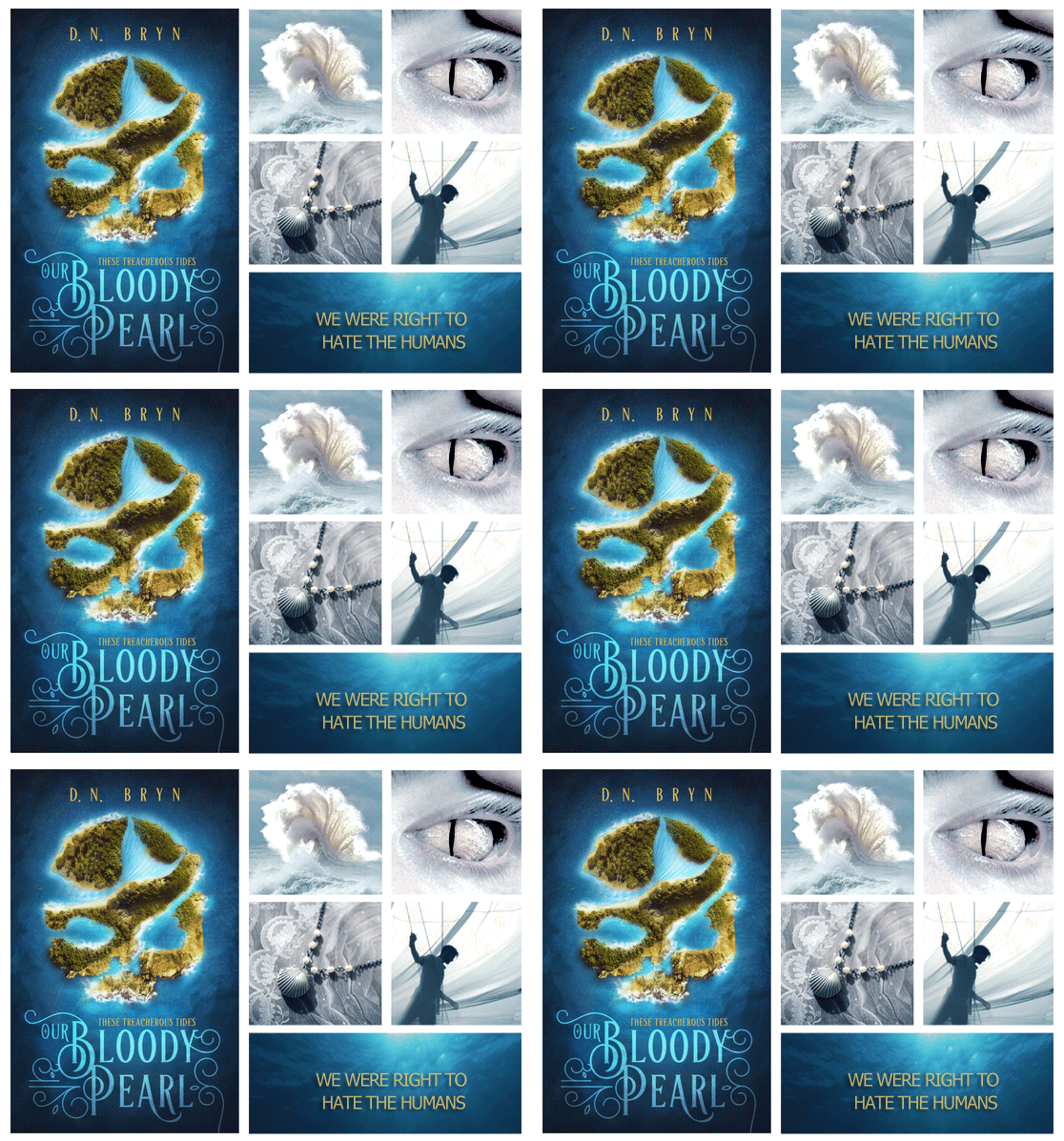
A standalone fantasy in a world of merfolk and pirates…
The ocean is uncontrollable and dangerous.But to the sirens who swim the warm island waters, it’s a home more than worth protecting from the humans and their steam-propelled ships. Between their hypnotic voices and the strength of their powerful tails, sirens have little to fear.
That is, until the ruthless pirate captain, Kian, creates a device to cancel out their songs.
Perle was the first siren captured, and while all since have either been sold or killed, Kian still keeps them prisoner. Though their song is muted and their tail paralyzed, Perle’s hope for escape rekindles as another pirating vessel seizes Kian’s ship. This new captain seems different, with his brilliant smile and his promises that Kian will never again be Perle’s master. But he’s still a human, and a captor in his own way. The compassion he and his rag-tag human family show can’t be sincere… or can it?
Soon it becomes clear that Kian will hunt Perle relentlessly, taking down any siren in her path. As the tides turn, Perle must decide whether to run from Kian forever, or ride the forming wave into battle, hoping their newfound human companions will fight with them.
Our Bloody Pearl is a fantasy novel, with slight steampunk world building and a bit of both romance and deep friendships. It has a simplistic but endearing plot, with strong themes of family, forgiveness, and home. Prepare for a voyage of laughter and danger while your heart is stolen – if not eaten – by sirens.
I haven’t talked about this during the month of pre-release info, because these aren’t the character’s defining characteristics and I don’t want to portray them as token diversity to gain brownie points, but because this is the final release post:
Yes,this is an #ownvoice book about a nonbinary, disabled protagonist (who isn’t“healed” by some ablist power of love) and an asexual love interest. Yes, the entire cast are characters of color. Yes, Simone is a trans woman, and she and her future wife do live happily ever after.
For those of you who are enthusiastic about OBP but don’t have the funds to purchase it right now, please note that in the tags when you reblog the post, and I’ll see what I can do for you!
So I finished Our Bloody Pearl and I can confirm…
This book is everything I wanted and more. I knew from the first page that it was going to be good, but it grabbed me by my face and also by my heart and dragged me into the ocean depths, never to be seen again xD I have left my (more sensible) review on goodreads, and you should have a look there to see if this is the book for you! SPOILER: if you like mermaids and adventure and character relationships that will warm you to the bottom of your soul, I would definitely give it a try.
With @brynwrites’ name on the cover, I knew it would be quality, and OBP does not disappoint. ❤
you know those posts that are like, “remember when we used to read books and now we all have no attention span because of the internet.” then there’s the very contrived advice that’s like, “if you want to be a writer you have to read”??
well i think they’re completely true but they also really suck, and we of the youngish adult writers of 2018 have it pretty hard, especially those of us in fandom who enjoy reading fanfic more than original fic because it’s mostly tagged properly and possesses the emotional catharsis we’re looking for, pretty much guaranteed.
that said, i think it’s really important – whether you write fanfic, ofic, or both – to read traditionally published work, in part because it can help better inform your fanfic, but also because it will help develop your writing overall. and if you’re interested in ofic, it’s pretty much a necessity to read.
so, i just graduated from an MFA program in creative writing, and contrary to popular opinion, the MFA does not actually teach you how to write. it gives you space to write, and mostly, it teaches you how to read as a writer.
so here is everything i’ve learned about reading as a writer over the past two years:
you do not have to read anything you don’t want to read
part of the problem with “read everything you can!” advice is that there is a lot of stuff out there, and a ton of it doesn’t jive with your interests. moreover, there’s a kind of pressure to read the Classics just to say you’ve read them when in fact a lot of them are boring, irrelevant, and dare i say overrated. so here is me giving you permission: you don’t have to pick up Hemingway or Faulkner or whoever else to be a good writer. life is too short to force yourself to read dead white dudes.
if a book doesn’t grab you by the first 10%, put it down
this is what has helped me more than anything else as a reader, because i found i would commit myself to a boring book and then never want to read it, so i would stop reading for months at a time. so, when you pick out a book, go to the last page and check the number. promise yourself you’ll read 10% of the book. 400 pages? read to page 40 and ask yourself, “do i really want to turn the page? if i put this book down, would i want to pick it back up again later?” if the answer is no, return it to the library or wherever you got it. try the next book in your pile. your TBR list is long; be merciless.
but if you want to make it look like you read the book…
commit to 25%. then go to the wikipedia article, read the plot summary, and fast forward to the last 10-15 pages. bam. you’ve more or less read the book. bonus points if you watch the movie, too. so if you’re really committed to reading Ulysses or whatever but you don’t want to slog through it, you can digest enough to be able to hold a conversation about it in a few hours and move on with your life. you can even pretend you enjoyed it and found it a formative reading experience that helped shape your understanding of the work of fiction, really, absolutely groundbreaking, etc etc. this is especially helpful if you find yourself anywhere in the literary sphere because other writers will expect you to be familiar with the canon.
read selfishly and take tools from everything you read
when you read anything, even the stuff you don’t like, ask yourself, “what tools can i take for my own writing?” let’s say you really love the plot structure – write it down somewhere so you remember to try it out for your own story. if you love the lyricism of the sentences, find a few sentences you really like and jot them down by hand, inspect what about them makes you love them so much. steal aspects of characters you admire, pacing, conflict, stakes. steal as much as you can without stealing the words themselves. you can even use this for things you don’t like by rephrasing the question: “what is it about this story i would like to avoid in my own work?” pivot every single thing you read to be about you and your writing. take notes. mark up and highlight your book if you have to. reading as a writer is not a passive activity but an active one. you’re not being entertained, you’re learning. so let published works teach you.
carve time out of your day to read
at 7pm every day, i put my phone down and pick up an actual physical book. this is my personal preference – i have no beef at all with ebooks, but honestly, i get so tired of staring at lit screens all day, and paper books without the distraction of my phone is such a nostalgic feeling for me, back when i was 14 and the library was my second home and if someone wanted my attention they had to call me on a landline. if you had the same upbringing, dedicating some time to read a physical book will do you wonders. if ebooks are your thing, it’s still important to schedule reading time for yourself, not as an obligation to uphold, but as something to do that’s good for you and that you enjoy.
write letters to your favorite authors!!
seriously. if you love a book, let the author know. they will not be annoyed or upset. they will be thrilled. it’s a good way to network with other writers, and it’s a great practice of literary citizenship.
when someone recommends a book to you, ask why
this is something i’ve only recently learned to do, as someone who gets book recommendations pretty much constantly. if the person knows you decently, i don’t think it’s out of line to ask, “what would i specifically like about this?” because then that will tell if you if the person is only recommending it because they like it, not because they think you’ll like it. if the person knows your writing, it’s fair to ask, “how is this book in conversation with my work?” so you have a head start in the kinds of tools you’ll want to take from it.
follow your aesthetic instincts
as a writer, honing your aesthetic will always be one of your highest aims, which means constantly seeking out writers whose aesthetics you admire and analyzing what it is you admire about it. “aesthetic” is kind of a vague term, but it refers to your overall vibe – the things you write about and why you write about them. my aesthetic is more or less “midwestern class warfare meets sexual identity crises with a lot of dark humor,” so i tend to look for other writers who share facets of that aesthetic and i inspect what’s working for them, where they publish, what their influences are, etc. i try to read both within my aesthetic but also far outside of it too. for example, i love historical fiction but i know i’ll never, ever write it. but i appreciate the aesthetic, and i can take tools from it like dedication to detail, internal conflicts, etc.
read short fiction (please)
this is my personal plea. short stories are a great way to find authors whose work is in conversation with yours, so that you can then go check out their novels with a good idea already of what you like about them. short stories are all over the internet via literary and genre mags. they’re a much smaller commitment than novels and tend to have just as much emotional impact (if done well) as novels. more importantly you’ll always have recs for your friends, and it’s a lot easier getting someone to read a 6k story you enjoyed than a 60k novel.
resources
don’t have time to read but like to listen? try the new yorker fiction and writers’ voice podcasts
like marking up books but don’t want to buy them new? check out thriftbooks (my favorite site on the internet – the link here will get you 15% off!)
want to stay apprised of the goings on in the modern literary community? subscribe to the lithub newsletter and arts & letters daily, two newsletters i’ve been subscribed to for years
as always i’m glad to answer any questions! happy reading!
Here’s to the fanfic writers who can only write sporadically.
Here’s the writers who can’t output enough to keep up with the most popular writers.
Here’s to the writers writing even though they get no feedback.
Here’s to the writers who somehow manage to scrape together a little inspiration and a lot of hard work to write that story they know nearly no one will read.
Here’s to the creators who keep going even when it’ feels like screaming into an empty void.
You’re inspiration, and I don’t know how you do it.
That one time Dorothy Sayers wrote Sherlock Holmes self-insert kidfic where her original character Peter Wimsey consults Sherlock Holmes over the affair of a missing kitten.
writing tip: don’t tell us your character’s backstory. don’t tell us what your character is thinking. don’t tell us what your character is doing. don’t tell us anything. the reader should simply look at a blank page and be suddenly overcome with emotion.
uhHHHH I don’t mean to be dramatic or anything but I literally wrote 50k words in two weeks without fuckening trying,like won NaNoWriMo in 2 weeks,TWO WEEKS, after joining4thewords.comand I’m like
w h a t
OK so it’s pretty much like Neopets + Gaia Online + RPG, But You Level Up Through Writing
You “battle” cute online critters with your word count
You can dress up your avatar and whatnot and there are different regions and crafting quests
and my weird brain apparently responds VERY WELL to nerd gamification
because Holy Shit I wrote 50,600 words in 2 fuckening weeks
and am now 4thewords’ new hype squad
(also if you join, use the referral code PEUOC65061 so if you get a full membership, which I totally am, we will both be rewarded)
basically, wow I have never been this productive in my LIFE and I can’t wait for their July mini nanowrimo event (they’re doing a pride month one right now so you can get a rainbow shirt and fight rainbow beasties it’s freakin adorable)
and if this sounds like something you would enjoy, go for it, try to catch me, just do it, come at me friends let’s write some good shit together




 willowfoot